Beyond Ordinary Floor Paint#
In hardware stores around Industrial Area, Nairobi, you will see tins labelled "Floor Paint." Many property owners purchase these budget single-pack alkyd paints, roll them onto their garage or workshop floor, and park their car on it. Three weeks later, hot vehicle tyres peel the paint clean off the concrete in four rectangular patches—a classic failure called "hot tyre pickup."
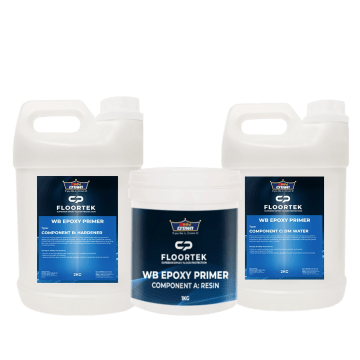
True industrial epoxy flooring is not paint. It is a thermosetting structural plastic. It does not dry by water or solvent evaporation; it transforms through an irreversible exothermic chemical reaction between an epoxide resin (Part A) and a polyamine curing agent (Part B).
Once cross-linked, the resulting polymer matrix forms an unyielding, high-density surface that is chemically impervious, shock-resistant, and mechanically bonded into the concrete substrate.
Why Epoxy Outperforms Tiles in High-Performance Environments#
While ceramic and porcelain tiles are staples of residential homes, they struggle under rigorous commercial and industrial conditions:
- The Grout Line Vulnerability: Ceramic floor tiles require cementitious grout joints. Grout is inherently porous. In commercial kitchens, abattoirs, and pharmaceutical clinics, animal fats, blood, and chemical washdowns penetrate grout lines, breeding bacteria and emitting foul odours. Epoxy is 100% seamless from wall to wall.
- Impact and Forklift Rolling Loads: A dropped 20kg steel wrench or the hard nylon wheels of a 3-ton pallet truck will shatter ceramic tiles easily. Industrial epoxy screeds (2mm to 4mm thick) absorb point impacts without cracking.
- Chemical & Fuel Resistance: Motor oil, hydraulic fluid, battery acid, and industrial solvents chemically dissolve concrete and stain tile grout. 100% solids epoxy systems are completely impervious to automotive and petrochemical fluids.
The Critical Preparation: Why Diamond Grinding Is Mandatory#
You cannot apply epoxy to smooth concrete. Power-trowelled warehouse slabs have a slick, glassy surface layer called laitance. If epoxy is poured over laitance, it sits on the surface like glue on glass.
Our Epoxy Flooring Contracting Division uses heavy multi-head rotary diamond grinding machines fitted with industrial HEPA dust extractors. The diamond segments cut away the weak laitance, vacuum away micro-dust, and expose the open capillary pores of the concrete—creating a textured profile (CSP 2–3) that allows the epoxy primer to penetrate deep into the concrete mass.
Where Epoxy Flooring Makes Complete Sense#
Epoxy is the gold standard for facilities requiring cleanliness, durability, and aesthetics:
- Warehouses & Logistics Hubs: High-gloss reflective surfaces that maximize lighting efficiency and endure constant forklift traffic.
- Automotive Showrooms & Workshops: Seamless resistance to oil drips, brake fluids, and tyre marks.
- Food & Beverage Processing Facilities: Hygienic, anti-microbial coved floor-to-wall finishes that withstand daily steam-cleaning.
- Hospitals & Cleanrooms: Seamless sterile environments preventing bacterial colonization.