The Nightmare of the Peeling Warehouse Floor#
In industrial parks along Mombasa Road, Baba Dogo, and Tatu City, few situations are as financially catastrophic as a failed epoxy floor. A logistics warehouse or food packaging facility invests millions in a glossy, seamless resin floor. Operations begin, and within four months, forklift tyres begin tearing chunks of epoxy clean off the concrete in sheets the size of dining tables.
Dust from exposed concrete contaminates packaging, operations grind to a halt, and client goods cannot be dispatched. The facility manager blames the epoxy brand. But forensic investigation almost always reveals that the resin was completely sound: the failure was mechanical delamination at the concrete bond line.
Reason 1: Concrete Laitance and the Absence of Diamond Grinding#
When commercial concrete slabs are cast, power trowels run over the wet surface for hours to create a smooth, mirror-like finish. This process drives water and fine cement particles to the surface, creating a fragile, non-porous crust called laitance.
Laitance has virtually zero tensile bond strength. If epoxy is poured over power-trowelled concrete without mechanical profiling, the resin bonds to the weak crust. When a 3-ton forklift drives over it, the shear stress shears the laitance off the aggregate, taking the epoxy with it. Professional contractors must diamond-grind the floor to open the aggregate matrix and achieve a Concrete Surface Profile of CSP 2 to 3.
Reason 2: Moisture Vapour Transmission and Osmotic Blistering#
Concrete is a porous sponge. If a warehouse ground slab was cast without a continuous 300-micron polyethylene Damp Proof Membrane (DPM) underneath, moisture from the soil wicks upward through capillary suction.
Because 100% solids epoxy is an impermeable barrier, this rising moisture cannot escape. As temperatures rise, hydrostatic vapour pressure builds beneath the resin film, creating hollow, water-filled domes called osmotic blisters. Once blistered, the floor shatters under vehicular impact.
Reason 3: Invisible Oil and Chemical Contamination#
In operational workshops, motor oil, diesel, and hydraulic fluids penetrate deep into concrete pores over years of use. Simply washing the floor with detergent removes only the surface sheen. The moment hot epoxy cures, the residual oil acts as a parting agent, preventing chemical cross-linking with the concrete.
The Engineering Solution: Turnkey Preparation & Moisture Primers#
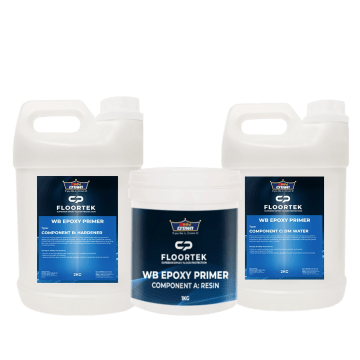
Permanent epoxy installation requires professional trade discipline: heavy triple-head planetary diamond grinders with HEPA dust extractors, moisture testing, deep oil-degreasing, and application of specialized water-tolerant epoxy moisture barrier primers from our Epoxy Flooring Systems. When done right, an epoxy floor lasts over a decade without a trace of peeling.