

Common Operational Challenges
Physical and chemical factors that dictate surface preparation and system selection in this environment:
- •Hot tire pickup where warm vehicle tires bond to and tear up inferior floor coatings
- •Brake fluid, motor oil, battery acid, and solvent spills chemically softening standard paints
- •Heavy impact and abrasion from metal tool drops, floor jacks, and vehicle lift contact points
- •Slippery walking surfaces in service bays during wet maintenance procedures posing worker fall risks
- •Oil-contaminated concrete substrates requiring deep degreasing before coating adhesion is possible
Compliance & Quality Benchmarks
Technical standards and regional regulatory frameworks relevant to coating and safety specifications for this sector:
Substrate Preparation, Coating Chemistry & Maintenance Protocols
Automotive Facility Floor Durability and Chemical Resilience#
Automotive dealerships, commercial fleet maintenance garages, and tyre fitting centres in Nairobi Industrial Area, Mombasa Road, Nakuru, and Kisumu endure continuous mechanical and chemical abuse. Vehicle hydraulic lifts exert immense compressive stress, while dropped steel spanners, sliding trolley jacks, and chemical leaks ruin untreated concrete or low-grade floor paints. Sienna engineers industrial epoxy and polyurethane floor systems specifically formulated for automotive maintenance operations.
Substrate Decontamination and Oil Extraction#
Applying epoxy over oil-soaked concrete is the primary reason garage floor coatings peel. Sienna employs deep chemical degreasing using heavy-duty emulsifiers followed by mechanical diamond grinding or shot blasting to open concrete pores and expose virgin aggregate. On deeply saturated slabs, we apply oil-tolerant epoxy barrier primers that cross-link within oil-contaminated pores, establishing tensile adhesion exceeding concrete shear strength.
Resisting Hot Tire Pickup and Aggressive Fluids#
When vehicles park after driving on hot asphalt highways, the warm rubber softens standard acrylic and alkyd floor paints. As the tyres cool, they contract and pull the paint straight off the concrete. Our cross-linked 100 percent solids epoxy and aliphatic polyurethane topcoats eliminate plasticizer migration and hot tyre pickup completely, while resisting glycol brake fluid, motor oil, and battery sulfuric acid.
Service Bay Demarcation and Slip Safety#
Workplace safety under DOSHS requires clearly demarcated pedestrian walkways, vehicle inspection lanes, and oil-collection zones. We incorporate slip-resistant aluminium oxide or graded quartz into epoxy wearing coats around wet wash bays and lube pits, and apply high-contrast polyurethane safety line markings that withstand rolling tyre friction.
Recommended Contracting Services for Automotive Workshops, Dealerships & Service Centres
Specialized application teams equipped for substrate profiling, moisture testing, and technical execution.
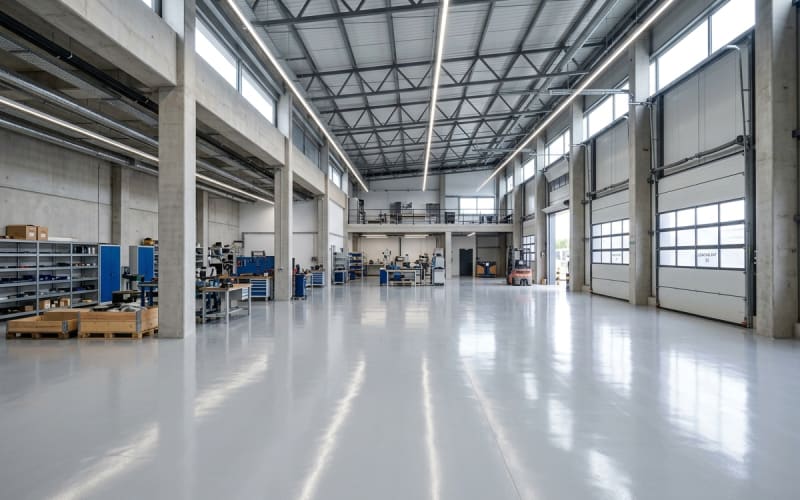
Seamless Industrial Epoxy & PU Flooring
High-build seamless epoxy flooring, self-smoothing screeds, and chemical-resistant floor coatings for warehouses, manufacturing plants, automotive workshops, and commercial facilities across Kenya.
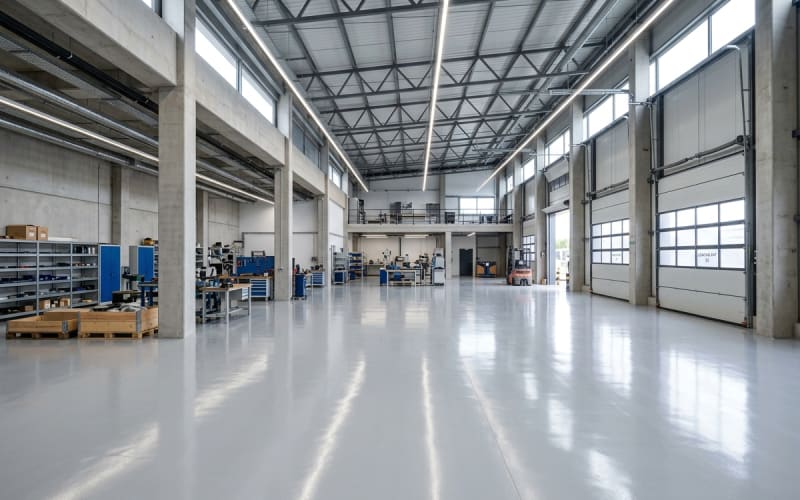
Heavy-Duty Polyurethane Screeds & Floor Coatings
Heavy-duty polyurethane resin screeds, thermal shock flooring (-40C to +120C), and food-grade hygienic finishes for commercial kitchens and processing plants across Kenya.
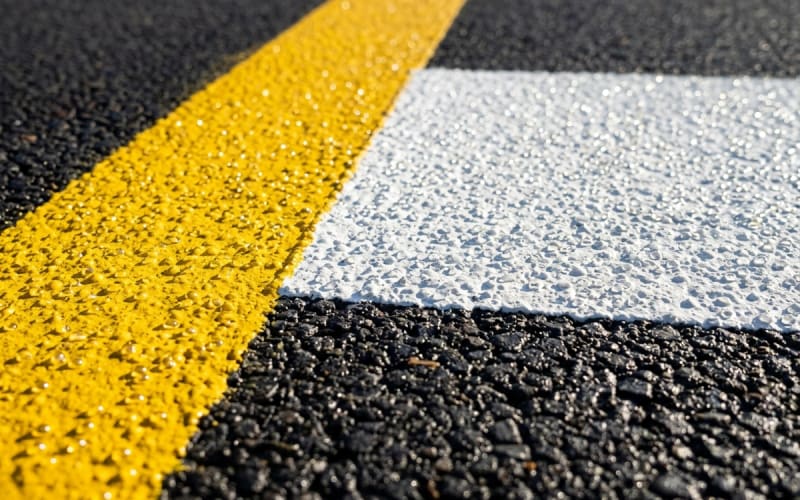
Road Marking & Industrial Floor Demarcation Contracting
High-build chlorinated rubber and epoxy safety walkways, forklift traffic lanes, and loading bay stenciling for industrial facilities and car parks across Kenya.
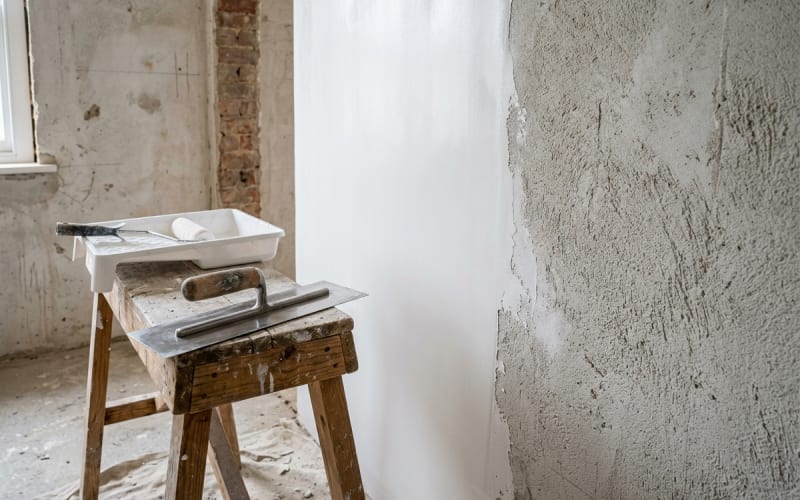
Surface Preparation & Diamond Grinding
Heavy-duty mechanical diamond grinding, paint stripping, floor tile glue removal, crack chase injection, and masonry skimming to ensure sound substrate bonding across Kenya.
Frequently Asked Questions : Automotive Workshops, Dealerships & Service Centres
Hot tyre pickup occurs when heat and plasticizers in tyres bond to soft paint. We prevent this by applying industrial-grade, 100 percent solids two-pack epoxy basecoats and chemical-resistant polyurethane topcoats that achieve complete chemical cross-linking and resist heat up to 120 degrees Celsius without softening.
Yes. We use specialized industrial degreasing agents and high-temperature pressure washing to extract surface oils, followed by diamond grinding. We then apply specialized oil-tolerant epoxy primers engineered to bond securely to hydrocarbon-contaminated masonry screeds.
Standard retail paints dissolve under brake fluid within minutes. Our chemical-resistant epoxy novolac and aliphatic polyurethane systems resist glycol brake fluid, motor oils, hydraulic fluids, and dilute battery acids, allowing workshops to simply wipe up spills without floor discolouration or bubbling.
We broadcast graded quartz sand or aluminium oxide aggregates into the intermediate resin coat before applying the seal coat. This creates a textured, non-slip profile customized to your safety requirements that maintains grip even when wet with water or light motor oils.
Our fast-cure commercial epoxy and polyurethane systems allow light pedestrian traffic within 24 hours and full rolling vehicle and hydraulic lift loads within 48 to 72 hours under typical Kenyan ambient temperatures.
Yes. We apply high-visibility yellow, white, and red safety line markings and chevron hazard striping around vehicle lift bays, pedestrian walkways, oil drainage pits, and emergency exits using abrasion-resistant polyurethane coatings.
For automotive showrooms, we recommend seamless high-gloss metallic epoxy or self-levelling reflective epoxy floors that create a mirror-like luxury finish, highlighting vehicle paintwork while resisting shoe scuffs and rubber tire marks.
Formal Specifications & eTIMS Invoicing
We supply complete compliance documentation including KRA PIN, eTIMS compliant receipts, Technical Data Sheets (TDS), and structured proforma scheduling for commercial facilities across Kenya.