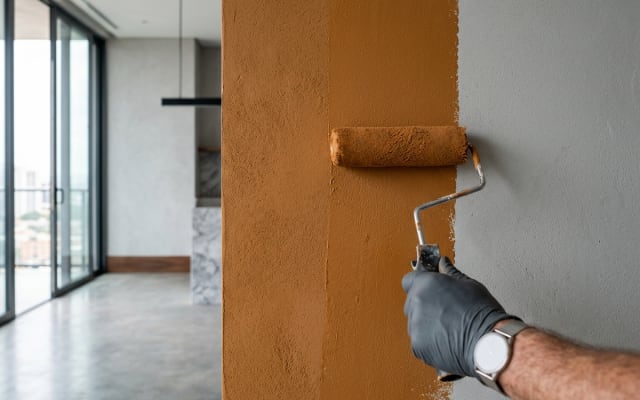
Interior Wall Emulsion & Decorative Painting
High-opacity washable silk, satin, and matt architectural emulsion painting for residential homes, corporate offices, and institutions.


Engineered substrate conditioning protocol for curing new cement-sand plaster, neutralizing high alkalinity, and creating an impenetrable barrier against crystalline efflorescence salts on residential and commercial builds in Kenya.
Fresh cement-sand plaster on newly constructed buildings in Kenya carries extreme alkalinity (pH 12 to 14) and significant internal moisture during initial curing. Applying conventional water-based emulsions prematurely over uncured plaster leads to rapid saponification of paint binders, catastrophic adhesion loss, and severe efflorescence.
Efflorescence occurs when residual mixing water and rising capillary moisture migrate outward through the porous plaster matrix, carrying dissolved calcium hydroxide and mineral salts to the surface. Upon contact with atmospheric carbon dioxide, these salts crystallize into powdery white deposits that physically heave and fracture brittle paint films.
Sienna Paints Kenya specifies an uncompromising plaster conditioning protocol: rigorous digital moisture verification using calibrated Tramex meters (confirming moisture below 15% wood moisture equivalent or 5% dry weight), mechanical scraping of dead cement laitance, neutralisation with mild acid etching where necessary, and application of deep-penetrating micronized alkali-resistant primers that cross-link within the plaster pores to create a permanent hydrophobic barrier.
High chemical alkalinity (pH 12 to 14) in fresh Portland cement plaster burns standard paint pigments, while migrating capillary moisture deposits soluble mineral salts (efflorescence) beneath the film, resulting in unsightly white crystalline crusts, chalking, and blistering.
Dry-brush and wire-scrape all loose efflorescence crusts without using liquid water, which drives salts deeper into the substrate. Treat persistent salt pockets with a dilute efflorescence neutralizing solution. Allow 48 hours thorough drying. Apply a solvent-borne or micronized acrylic alkali-resistant penetrating sealer to lock the plaster pores before applying architectural topcoats.
Turnkey installation and specialist contractor crews available across Kenya.
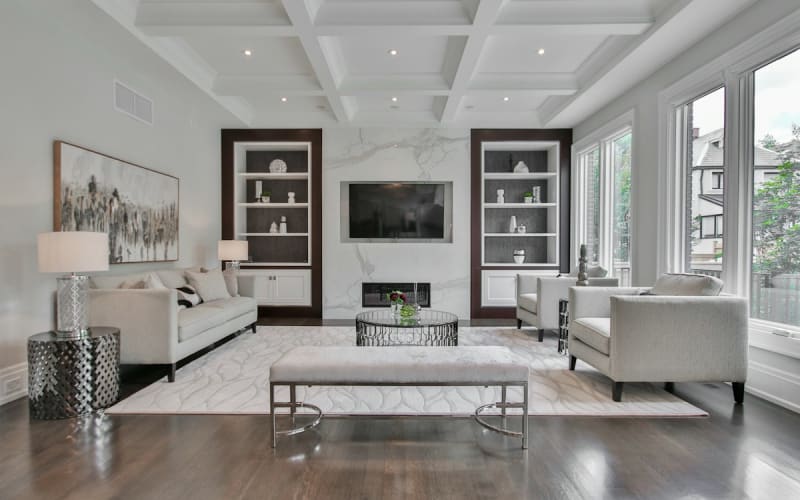
Structured, transparent painting and coating services engineered for Kenyans living abroad. Features verified digital inspections, daily video walk-throughs, laboratory color sampling, stage-gated milestones, and formal KRA e-TIMS invoicing.
Complementary specification standards and adjacent coating methodologies.
High-opacity washable silk, satin, and matt architectural emulsion painting for residential homes, corporate offices, and institutions.
100% pure acrylic exterior weather-shield paints engineered to resist extreme equatorial UV radiation, driving rain, and algae growth on facades and boundary walls.
Under typical Kenyan highland climatic conditions (20 to 26 degrees Celsius), cement-sand plaster requires a minimum of 28 full days to cure and allow excess moisture to evaporate. In humid coastal regions or during the long rains season, curing may require 35 to 45 days. Never paint based on calendar days alone: always verify moisture using a calibrated meter.
Moisture levels must be below 15% Wood Moisture Equivalent (WME) on a non-destructive digital resistance meter, or below 5% on a carbide meter. Primer applied over plaster exceeding 15% moisture traps water, leading to blister formation as the sun heats the wall.
No. Washing efflorescence with liquid water simply dissolves the soluble salts and carries them right back inside the porous plaster, only for them to recrystallize as the wall dries. Always dry-brush and scrape efflorescence off using stiff nylon or brass wire brushes.
Fresh plaster has a high pH (12 to 14). Standard decorative acrylic emulsion binders are not chemically formulated to resist high alkalinity; the alkaline lime saponifies (turns into soap) the resin, destroying adhesion and causing the paint to peel off in flexible sheets.
An undercoat provides opacity and color buildup over already sealed substrates. An alkali-resistant primer contains specialized resins that penetrate deep into porous cement pores, neutralizing alkalinity and blocking moisture-carried salts. An undercoat cannot replace an alkali-resistant primer.
